Am I black or Am I African? - Ep 18

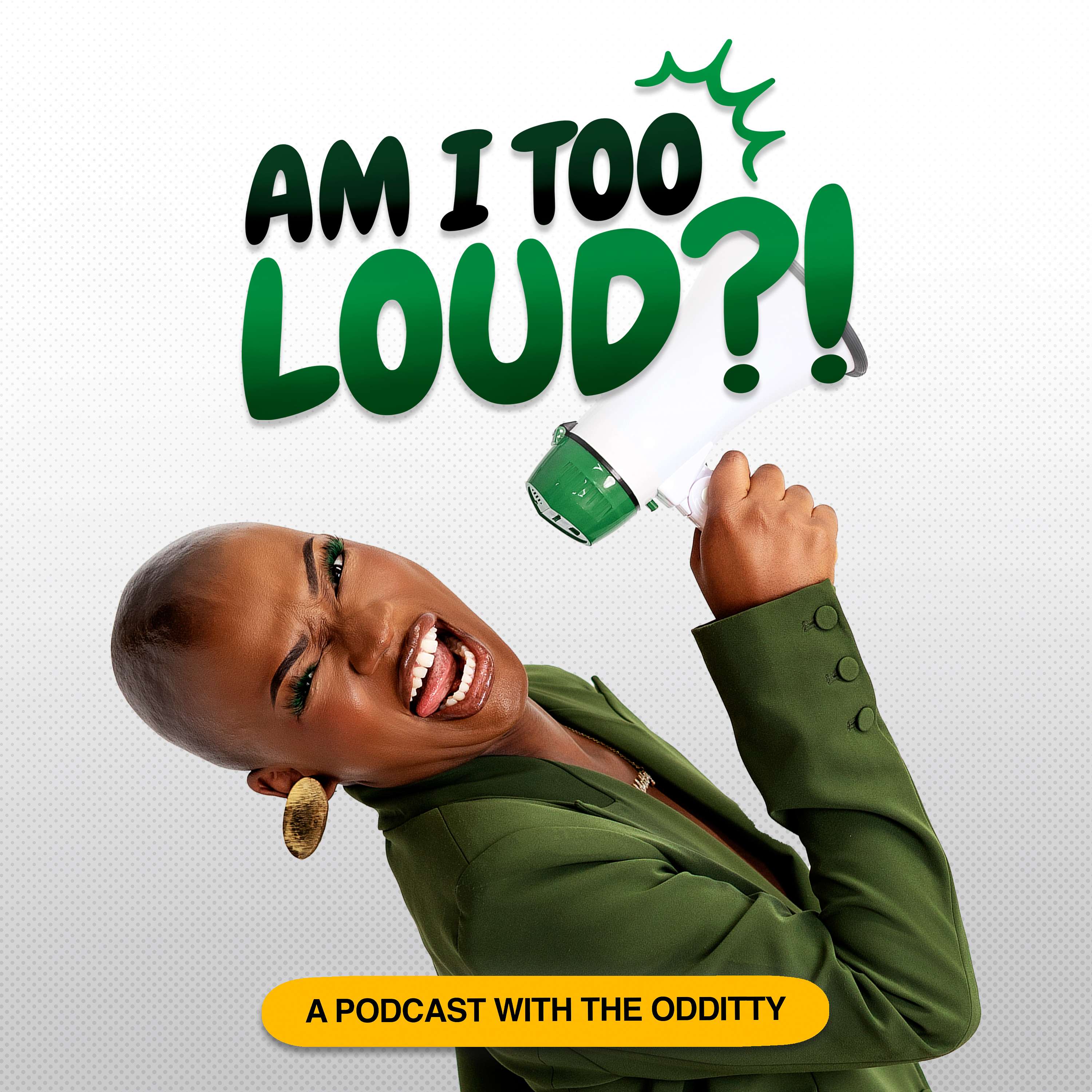

Hey POD FAM! 🖤 Let’s get into it—Am I Black or Am I African? Identity is complicated, and for many of us in the diaspora, the question of who we are isn’t always a simple answer. What does it mean to be Black? What does it mean to be African? And why do these labels sometimes feel like they clash?
No matter where you’re from or how you identify, this conversation is for you. I hope you enjoy this episode! 💚
Share your quirkiest, weirdest, or most unusual experience and be featured on the show - https://www.amitooloud.com/voicemail/ ______________
If you haven't already... Subscribe to AM I TOO LOUD?! with the Odditty here on YouTube https://bit.ly/SubscribeToAmITooLoud Or follow along on your other favorite podcast platforms... Spotify - https://bit.ly/AmITooLoudOnSpotify / Apple Podcasts - https://bit.ly/AmITooLoudOnApplePodcasts
Join the POD FAM on social media:
Instagram - https://www.instagram.com/amitooloudpod
Twitter - https://x.com/amitooloudpod
Tiktok - https://www.tiktok.com/@amitooloudpod
#AmITooLoud #TheOdditty #AmITooLoudSofi #AmITooLoudPod #AmIAnyonesValentine #PodcastEp17
STAY TUNED https://www.amitooloud.com/
STAY TUNED https://www.amitooloud.com/
Welcome to a My Too Loud The Podcast. Hey guys, welcome back to a My Too Loud The Podcast with Sophie, aka The Audity, and my Guillermo Donald. Hi Donald. Why are you drinking when we're about to start the intro? You're a crackhead because you only chose to drink that drink because we started the fing video. Yep. This is my intro. That was your intro. You guys, today my manager was like listening to the part, like my manager was talking to me, and then all those right beside me, hi Ivy, and my manager was like, we love Donald on the podcast. We think he brings a very dry humor to the podcast, and I'm like, Donald is such a dry person that I love that somebody else knows that he's like, he has a very dry sense of humor because he thinks like he's like Kevin Hart, and I'm like, no, you're more of like, a Dave Chappelle. Also, dry is a good thing. Oh. This entire time, I was thinking, do you think Dave Chappelle is not funny? No, I think he's hilarious. I'm not saying, well, you were like a Dave Chappelle, I didn't say you were a Dave Chappelle. Yeah, it's like. You should both 100% you're like 0.1. Like if I raise this cup and I'm like, well, it's fine fine, it's fine. This is your problem. You see, when you try to be funny, it doesn't work out. It has to come effortless. That's the my issue with you. Okay. Well, that's not the point because this is a special episode because guess what month we're in, Donald? One month. The month of love. No. The month of blackness. Woohoo. Guys, happy black history month. It is the month of love, but it's also the month of black history. I don't know. It's black history month in America. Black or love. Both. Okay. What is wrong with you? Why would you even pick that? Black is love. I love black love. Anyways, the point is, it is black history month, guys, and this is a special black history month episode. And I think this is going to be such a very interesting podcast episode because you guys know we talk a lot about identity on the podcast. Everything I speak through, every time I talk on the podcast, I always talk about it from a point of identity and nationality and where I'm from in my history and my culture. And this month is so special because black history is such an important part of the American experience and I wanted to talk about it. And when me and Donald were thinking about what episodes of film today, we had so many ideas for it. And then when we finally realized, always shoot is black history month. It makes sense to do a video about black history or podcast about black history. And it just was so seamless and we had so many different facets and ways we're going to come at the podcast. But this is not going to be a lecture. It's not going to be like some educative conversation and it's going to be I think the most genuine raw authentic vulnerable conversation about race that I think you would ever see on the internet. So brace yourself before we get started because I think me and Donald have very, I think we have very similar views about blackness and all that conversation. However, we're also very open and we are curious about the other types of views that could be out there. You know how to do this in real? I am so good at it. So we're going to start there. If you're not interested in like black history or blackness and you're like, oh my god, I've read the case maybe check your privilege at the door and that's maybe being so rude and I'm so I'm not sorry, I lied. I need you to understand that this is an episode that you need to listen to. If you're black, if you identify as African, because I believe the title of this plot has going to be am I black or am I African? I think this is a very important conversation to have regardless of how you identify because I don't think you ever, you ever lose knowledge, right? I think it's important for you to just have knowledge. However, it comes or ever shaped that is and so this conversation is going to be important and I think I would love for y'all to just listen to it and let us know in the comments. If you're listening on this on Spotify, let us know in the comments how you feel. Be very vulnerable and honest. If you feel very weird or you feel like you're shy, definitely send an anonymous voicemail on the website of my2law.com or just comment on YouTube as well because I think that's where we should put our video content. We're done with the intro. The biggest question when asked on the first is, do you identify as black or African? Really? Tell me why. So born in Africa? Period. No, do you identify as black or African? I identify as African. Why? Because I don't have a blue passport and I was also not born in America. I was born in Nigeria. Now, before we get this episode started, I went through the process, guys, of finding the definition of black, the definition of African and the definition of African-American because I don't play. Okay, I'm edumacated. Okay, I'm a smart woman. So black, the definition of blackness can encompass a range of meanings depending on context. In a cultural or social sense, it often refers to the identity, experiences, and perspectives associated with people of African descent or those who identify, that's important in their identify as black. It can relate to shared histories, cultural practices, traditions, and struggles that have shaped the black community globally, globally is huge here. Blackness can also encompass diversity within itself, reflecting varied experiences based on geography, language, and individual identities, again, individual identities. And it's a term that acknowledges both collective experiences and individual uniqueness within the broader framework of African heritage identity. So after reading that definition, I identify as both. I think I am both black and African-American because if within the cultural and societal context, you mean black and African? Yes. Okay. Sorry. That's what I meant. I identify as both black and African because I don't think unless you are African-American and African-American, I'm going to explain what that means. I believe blackness has to do with your skin color, one, and your background of cultural heritage or background in a sense. Okay. You agree? Yeah. Okay. So African-American means African-American typically refers to people in the United States who are of African descent tracing their ancestry back to Africa, primarily from sub-Saharan regions. The term gained prominence during the civil rights movements of the 1960s as a way to assert cultural and historical identity. It encompasses a diverse group of individuals with varied cultural backgrounds, including descendants of enslaved Africans brought to America during the transatlantic slave trade, as well as more recent immigrants from Africa or the Caribbean who have become part of the African-American community. The term reflects a shared heritage and experiences shaped by centuries of history, struggle, resilience, and cultural contributions within the American society. When I read that meaning, I believe that people can be both African-American and African. I don't think it needs to be one in the same. And we'll talk about that as we go through the episode, because I tend to hear a lot of people divide that, right? Because we watched a video earlier today, me and Donald, when we were doing research about this episode. And it was a jubilee video where it was people who were saying, pick the people who are African versus African-American. That was the entirety of the video. And two particular girls, one girl decided that her parents were both Ghanaian, but she identified as African-American. And another girl, whose parents are both, I think, they were Eastern African, and she identified as African. And I remember when I saw that, even though she was born here in America, and I realized it honestly makes no sense that you have to pick one side, because essentially you can be both. Because you can trace your heritage back to Africa that directly, because you do have African parents who came here, your first generation, whatever that is. And also, you are African-American, because you were born in American soil, and you were raised as an American. Your parents might have cultural values that add to your history or to your culture and whatever, but at the end of the day, you were raised in America. It's such a different experience, no matter how much your parents might try at home to make you feel like you're in Nigeria, you're learning the language. The fact that you were born in America affords you a certain level of privilege that Africans would never get to have born back home. Does that make sense? Okay. Final definition, before we start getting into the real conversation, is what is an African? Who is an African? African refers broadly to people, cultures, and things related to the continent of Africa. It encompasses a vast diversity of ethnic groups, languages, traditions, and histories across the continent, 54 recognized countries. I haven't been able to talk about, like, I went to Africa, or I went to Africa in the 54 whole countries, where in Africa did you go to? Africans trace their ancestry to various regions and civilizations that I've developed over thousands of years, contributing significantly to global history, culture, and civilization. The term African acknowledges the rich and multifaceted tapestry of identities, languages, religions, and traditions that characterize the continent and its people. It's important to recognize that Africa is not a monolith, but a continent of immense diversity and complexity. Okay. Let's have a conversation about blackness, Africanness, African-Americanness, Afro-Latino, black American, all of it. What are your first thoughts after all of this conversation, Donald? It's a lot. First of all. I think you do identify as black from this definition, because I feel like when you look at the tapestry and you look at the people who really coined the movements of blackness. I think that also came from a clear understanding of what it meant to be African, and what the African and African-American means, because I feel like when people are like, I'm African and I'm African-American, you are saying you are African and American. At the same time, exactly. Exactly. But with the definition of Africa that we have here, with the culture and all the obviously there is that gap. So it doesn't sense why you would want to make it its own thing, but ignoring the fact that there is an African part, knowing whether you understand the food debt, because even us as Africans, we're Nigerians, we don't really know the full scope of what it means to be African. So we know much more that we also need to understand, so that's like what I'm getting through. So my biggest issue with blackness, or like folks wedding, probably being black, is the lack of homogeneity that is across the board. And what that means is that, what I'm trying to say with that is I wish we were more together in a sense. So I think we would go farther if we were together, but also our biggest strength, which is our identity, our culture, our traditions, our swagger is also our biggest weakness, because what that means is we're all so very drawn and empowered by our culture that we don't want to share with everybody else. And you see that within blackness across the board, like a Nigerian is so arrogant and so Nigerian that we're going to be for Ghanaians from now it's old tomorrow. Even within Nigeria, you see that within culture, right? Ibo versus Europa, Howusa versus Fulani, Edu versus Irobo, like you see that happen within the African American experience, like, oh, your life skin versus your dark skin and colors, and please a huge factor in that. Or you're from the East Coast versus the West Coast, your Southern versus LA. You know what I mean? Like your Afro Latino, but you're like the life skin Afro Latino, you're darker and you have an Afro. Like the things that keep us down, oftentimes definitely stem from slavery and, you know, white colonization, but we continue and perpetuate those conversations. Like this is not, at some point we have to be very, very honest with ourselves and say, colonization has a huge factor as we deal with everything we go through, but we also as a people constantly perpetrate the same rhetoric that has been put in us by the colonial masters in the sense. You know what I mean? And I think that is what's unfortunate when we have this conversation, because I saw a TikTok and I think you pulled that up about this, I don't know who was saying it, but Cuban, was it Cuban actor, musician, someone? Sorry yo. I think he's like a comedian. Like a Cuban comedian who essentially was talking about what it is to be Cuban. And I think the host at that point was asking him, oh, you're a black. I thought you were a black one. I assume you're a black and he's like, well, I don't think you're a black and he was like, well, we're all black, right? Because we focus too much on where the boat dropped us off versus where we were picked up at the end of the day, right? So the idea that if you are African-American because you cannot trace your heritage down to some village or country in Africa, you can't relate to that experience. Therefore, you are not African. In itself is frustrating, but understandable, does that make sense? Like I don't fault anyone who's African-American who is not going to do accessory DNA or 23 and me, whatever to try to find where they're from because we don't even know how accurate that is, right? Who's just going to be like, this is what I know, America is all I know, I'm just going to focus on here. I don't fault them for that because it oftentimes feel like a lost battle to then decide one day. Oh, I might do Ancestry DNA, okay, I'm 56 percent Ghanaian, so I'm going to go to Ghana and then decide I'm Ghanaian today. That identity is so hard to get, to understand if you're sure you're not born to do that. We understand how important it is from our culture perspective, like even me as a Eurobar girl, right? Even learning my culture is hard and I have family who's all Eurobar. So imagine someone with an American background having to start from scratch to learn a culture that is constantly evolving as well. Like I think it's hard and unfortunate, but I think that's also our biggest struggle and I think that's why this conversation has to happen because when we talk about black history with them, black history in America, I am very kind of in the middle. Right? Because when I came to America, I came to America when I was 15, 16 years old and I, so my first 16 years were in Africa, I was in Nigeria and then I am 27 right now. So I've spent 10 years in America. I can't consider myself fully African-American because first of all, I don't have the passport, but also I was born here. So my high school experience, all of that was very much Nigerian. However, I can be empathetic, I can be understanding to the American experience with the American experience because I've lived here for 10 years and I understand that 10 years was intense because that's the impact. The impact that I was 17 to 27 are such pivotal years in your life, especially with social media, thankfully. So I'm able to keep a hand on the pulse by call me Nigeria while also living the experience here. So I'll be stupid to not understand the black experience in America is a difficult one. Because it is. And mind you, I haven't have a privilege because I'm African. Like my name, my background, even holds even more weight when I'm looking for jobs. And I'm looking for opportunities here because the American context still puts Africans before African-Americans in a lot of cases. So even society here makes it so hard to be black, to be African-American in that context. And I think that's so exhausting. So I don't know, I feel like this is already coming off so deep and so intense because it is. Like the conversation is not an easy one to tell to have. So because I know a lot of Africans don't understand it and it's so hard to explain to you guys like every time I have an effort and the only way to explain to you guys is when I have an African creator come to America, the way the experience of America here always makes me laugh. And I'll give you two examples. I had a friend who is of one of the, he is honestly the largest black travel creator in the world at this point that I know of. He might, I might be wrong here, but with his amount of follows and everything he is. And I remember when he first came to America, he reached out to a ton of white creator as black creators, everybody, and no one gave a fing sh that he was here. And he was so shocked, he's like, where is the collaboration, where is the drive where the people here? And I'm like, America is a whole different ball game because first of all, you're not the majority. Second of all, I don't give a sh* about black people in a lot of sense. And no matter how hard you try to climb the totem pole here, they will always find a way to keep you where you are because you are not white and already that's an issue. And we see that within the pro-school climate as well here, like blackness in itself is always put down. I have another creator who's, again, a huge creator in Nigeria, who came into America and he's like, no one is responding to my team, someone's responding to my calls. If we don't care, I'm like, yeah, like, for the most part, white creators don't need black creators or the black dollars so they don't care. And the black, or African-American creators who are here, the audience are different as they particularly interest in Africa. They really don't give a f that you're an African creator because what do you have to offer them? It's a different mindset because in America, it's just a different ball game. Africa is such a unique country to live in, especially when you talk about race relations. And especially now that we have Trump in office, people underestimate how impactful it is to be black. And when we talk about it from the Super Bowl and everything that's been going on, which we'll get to in this video, I feel like I've been yapping so much, but I guess we're passionate about this. I guess we're passionate about it, but go ahead, Donald. I think I'd like to break it down from like, I think the existing America is a white person, which is something that we will never understand, right? But think about this with like a thought experiment, there's a certain level of thinking or just a thought process that happens when you're not white. Yes. Right? And I think I'm so interested to hear your explanation or your understanding of that thought process, right? Because we've talked about the travel creator, right? Creators who come here and they're trying to work. They move for us, trying to integrate and I work with, I think about the thought process that we have to go through in the mental gymnastics, right? Better work with it. Yeah. To even try to integrate and move and understand and be cautious and like, you know, but when you're here and you're white, right? You don't have to play that scene then you're not playing the game. And then let's add another way and this is something when you talk about how diverse Africa is, right? Africa is very diverse. Two diverse. Right? Somebody say two diverse. One of the biggest things like for us, trying to understand, like, we're all trying to relate to someone who is from Ethiopia or someone who is from South Africa. We don't have any travel. We don't travel within the country. It's extremely difficult. Yeah. Now, do you think with whiteness, right? Because of, because I think when we see like being African and being black is diverse. It's like, we're talking about like, you can break it apart into a million pieces. Yes. You can do the same with whiteness. Yes. You think that's like a foundation of the problem because you talked about COVID-19. And I don't have facts to back this off. I don't really want to like, you know, make that like the center of my argument. But I'm also thinking about like how the state Africa was in before COVID-19, right? Yeah. And how diverse and how that was also affecting our way of life. Because Africa getting to where, how diverse it is right now was not just the result of COVID-19. It was the result of like who we are as a people. And what does that have to do with like how we fix it? That's such a deep question. And we're both too very uneducated people. It's very different. So it's hard. It's hard to, I think it's like two people just talking about the subject. So very that in mind, guys, I think that a huge problem we do have is the diversity. And it is very different from whiteness. However, I also think that our lack of interest to find each other is also the biggest, our biggest issue. So like, as an Nigerian, I can't stay growing up that I ever had any interest in going to any other African country except for the West. What? And I was raised that way because I was raised that way. Like the goal wasn't to go visit Kenya or South Africa. The goal was to go to America, right? And I see that across the board. When we even think about excursions or travel, right, we're going to the Western spaces. Think about it so far. The safari. Like why are we going to see like when we can go to New York in the cold, makes no sense to me, right? In many ways, I think that is our biggest issue because even within colonization and not to prove fault on our ancestors here, if the reason why it was so, and again, I don't know if it's true or not, it was so easy in quotations, right? To have us attack each other is because of that lack of interest in unification that we have. And now, this is not me being a conspiracy theorist, right? I always, I wonder why that is specifically for blackness or black people. It feels like there is something just like forcing us to not be unified because I always think about it from the space of if I ever saw a video of someone from Jamaica, right, over to Brazil and they're black, yeah, my support them, but it's also something that's like, oh, they're not me, they're not Nigerian or they're not. You probably have a very, I think you don't understand it. Yes. And there's something so interesting about how a lot of black against is such a broad statement to make, but it feels like we tend to, we tend to not be interested in learning about our same people, right? Like there's just a lack of interest there. And again, everything just goes back to colonization because I can argue and say was because like that's what we're taught, right, when you're ingrained so much to look at white people as like gods and the people, because I remember my first time my grandfather who was at the time, 80 years old came to America, remember he were driving down the road like from New York to DC and he was like, oh, my God, why people have so much brain and they're so smart. Look at how clear their road is. And the man, I was like, I don't think that's a white people thing. I just think it's like, I don't Westernization, I don't know. I was like, that rhetoric of white being better than blackness because of their skin color, because of something that you think is right, it's something that's been passed down for so long, right? Like it hurts my heart to think about it in that way, but it's so, it's so prevalent, right? Like when we watched the video about Jubilee and I feel like you guys should go watch it. And it was two Africans and one African-American girl who were all sort of figuring out who's African, who's African-American. And the entire video when we're watching it, the reason is why someone was African-American was so crazy to me. Like someone would be like, oh, you said you're an aerospace engineer, you have to be African. Oh, you dress so swaggy, you have to be African-American. Sure it is. Stereotypes, right? Well, if you look at the f tape, we all look the fing same. From Brazil, to Nigeria, to South Africa, to all these African-Americans I'm a big forehead. What? The most part. Okay, so, so we all look the same. African-American point. Yeah. Honestly, I'm pretty devil's advocate in the way in this conversation. Could it be because we are just human, right? We're too human. We are human. Because everybody's human. Yes. So, why is it us? No, that's the thing. I don't think in this conversation, there's a difference between being like, like, difference in terms of like, aside from history, right? There's a difference in how we behave between being, between blackness and whiteness. I don't think so. Okay. Because if we try to explain it. Honestly, I just don't know. Honestly, I just don't know. No. Actually, we were talking. I realized something. Okay. I think why we're so, why it's harder for us to sort of connect with the diaspora and everybody else is because of slavery and how it worked. So think about it, right? We're the only group of people who were shipped to so many different places, like so many, like Jamaicans, you know, Haitians, like Liberians, South Africans, like Cubans, and Nigerians, like, and our culture is so potent and so connected directly to ourselves that it's hard to try to convince someone whose reality and belief system is so solid that they have to think a certain way. And I think that is my biggest issue because for me, I always think about it from a perspective of the little things, right? Like, maybe the darker, the darker girl is not as pretty as the light skin girl, right? Those little nuances within every culture is, is probably in Asia with Indians, right? When they talk about the caste system and like the lighter in dark mix, stuff like that is human nature, terrible parts of human nature, right? What's dark? But within our community is all, there's levels of that. Right? There's levels to like, whether you're from the certain place and so you're a certain way you're richer because you appear this way, and it's all at the end of the day, a measure of proximity to whiteness. And that is my biggest issue. Yeah, because that's the biggest problem. The problem with us is the comparison. And it's every, every fucking race, every race, because it's the issue, oh my God. I just got, I just got like, you don't want to get like a ding, ding, ding, ding, ding, ding, think about reading in Nigeria, right? In Nigeria, we're taught about the, what's it called? The warriors and the kings who had slaves, the villages who sought slaves to each other, right? Who dominates? That's human nature. Yeah. If you try to explain how the Romans were roaming, it's the same way how the Jajah of a woman was like, it's the same thing. I own my days when I was in secondary school, high school. I remember when we talk about Greek mythology and Roman, the Roman Empire, it all sounded so familiar to African empires, right? Because we all did the same thing. In many ways, the only issue within the caste systems and all that stuff was financial. So money equals power, that's what it was always until the white men shifted and it became race. So it became, because I am a certain color, you're less than me. And that shifted the trajectory of a lot of things down the line. And when you were talking right now, that makes sense, because whether that, you're Asian, whether you're whatever it is, right? Every beauty standard, every goal is to be close to whiteness, because in this scenario and westernization, whiteness holds that power. Ultimately, think about like the wider you are in many ways right now, it's like, well, if you're Russian, and then you're like American, that's it, right? It's like Italian, but think about Italians are not what they call like primal, primal. Yeah, I think you're talking about, honestly, I don't know. I think about like, because even I, they went through a lot of shit also, yeah, they're minority. I keep thinking about it. Like the brown or you are, the less you are on the totem pole, like, I don't get it. But the thing is, there's something to be said about Americans, because remember Americans wear the rebels. The people who came and created America with people who like, they do want to be part of like that system, right? Yeah. That's why. And then they created a worse system in place instead. Well, you see what's crazy. It's like, I think about boarding school, right, when you're a junior and you get bullied by the seniors, and then when you become a senior, you perpetuate the same cycle and then you bully, right? Yes. It's a human thing. Yes. It's a good thing. It's a human thing. It's a whiteness thing. It's not whiteness. It's a human thing. Yes. And I see that within the American context. Like, oh, we suffer. So now we're going to find people who are going to suffer too. We're going to perpetuate this hundreds of years of slavery and all this shit that went down in America. But I still think that the biggest issue within the black diaspora is that lack of unity. And I don't know how to fix it. I don't think there's a way to fix it. It's not fixable. It's not fixable, right? It's not fixable. I don't think the goal should be to fix because like to bridge the gap because I always say it. I like to use the voice to educate. Remember, I was. You talk about this a lot. Yeah. The goal is to educate because this is a product of divisiveness, right? For example, yes, yes, yes, it's a tool. Okay. The gun. Okay. How did we go from Africa was a continent that used machetes and like all these other things to fight wars? Yeah. White Mac created a gun. Yeah. The point of creating the gun to be honest, it was as a tool for them to use for control. Yeah. Right? And there are other tools that have gone away from like just the gun to the bomb to like you see how they're always searching, but it's also like the psychological aspect. And I think like there's no education to like really explain how clever, right? And the intention that is, you know, being inserted into like to create that divide. Yeah. That's not being taught. But teaching history, nobody's talking about the why, nobody's talking about the people, nobody's connecting the dots. Yeah. But they use an example like here to go, why? Because it was the Jews. Yeah. Do you know what I mean? It's like, what about like all the people who like technically are African heroes, the person who named, or Mary Sressa came and stopped the king of twins, the what's the name, Herbert McCauley, all the people that we hold, like think about it. Like who is the guy on the Nigerian couple, the coin, the coin, white people. Back to, are we black or African? Because as we're talking about that, I oftentimes, so again, we talk about being Nigerian and how that's a huge factor in like conversations we have. And it's black history month. And I wouldn't lie and say that I oftentimes feel a misplaced sense of, I don't know what to do here. Right. I can't understand it. I can't relate to it because I can't. Like the end of the day, like I did not grow up in America. I live in America now, but I didn't grow up here. So it's a learned experience to be black in this country. Like no matter what, are you choose to partake in it or not? Either way, the system puts you in it. So when I see uppity Africans, because they are uppity Africans, we talk about like, oh, you know, black Americans are this and we're only going to focus on ourselves. That oftentimes is a privilege to do so, because you're weaponizing your privilege in African within the ideas or eyes of whiteness to then perpetrate some more honestly stereotypes and issues down to the folks who look exactly like you. That's always been my biggest issue. And so like, how do we fix it? You know, you said it's not fixable. How do we start the conversation, right? Because when I even see these channels do the bridge, the gap African or American, are you African? Are you African American? I'm filled with such annoyance, right? Because they don't fix the problem. They don't talk about it. They don't close the loop. They don't close the fucking loop. And I think I think it's always you end it with like you're leaving the conversation. No feeling very raw, because like again, I go back to that jubilee fucking video, because if you have not seen it, we're going to try to link it in the description of the podcast on YouTube. It's two Africans and one African American girl. And in the comments, it's a ton of Africans and even African Americans talking about how this African American woman was very disrespectful of the African, kept saying, I'm so sorry you're African. Go here. I'm so sorry, African. And I don't fault her for it because even if I, there's a difference between an African American person who's lived their entire life in America, who's only source of sort of like life is to survive America. Like imagine someone who's family and history where all slaves and then they finally just fought their way through and you're just trying to survive, whether that's through any means necessary, right? And you're not talking to the person, oh, by the way, you might have history in Ghana or Nigeria. So you may be letting your history. Who the fuck has time for that? Because my T-Mobile bill is coming in the bill in the mail tomorrow. My life is, at this point, fuck Africa because Africa is going to give me food when I need to make sure I have a life to live in this country that I'm in right now. For experiences like that, I can't fault or argue and say find where you're from because it doesn't make a difference. Yeah. It's a different space, a different speed. And even there's so much repercussions to even going back home, right? We've seen that happen in Ghana with a year of return. I don't know if folks who are living in the country saying these people from the diaspora are coming, they're taking over our dollar, the dollar amounts is increasing, there's so much that we don't think through about the experience. So it feels complicated, it feels exhausting. I think, I think, okay, it's coming back to the episode, right? What we can be kind of like close out of, I think humanity, right? Because borderline, we're all human. And the opportunity African forgets, because I was going to say, I think humanity, remembering like, on the base layer, we're all human. No, we're human. On the base layer, we're all black. No, no, no, no, no, no, no, no, no, no, no, no, no, no, no, no, no, no, no, no, no, no, no, no, no, no, no, no, no, no, no, no, no, no, no, no, no, no, no, no, no, no, no, no, no, no, no, no, no, no, no, no, no, no, no, no, no, no, no, no, no, no, no, no, Look at me in the eye right now. For me, for me. No, no, no, no, hold on. Oh my God, guys, hi. Welcome back to my channel. If you're new here, hi, my name is Sophie. Everybody calls me the Autody. If I wasn't speaking like this, you might not know that I'm a fing African. Like I can't speak, I'm a little bit sorry, we're not saying any boron. And black ones are more so. To my switch and say any boron. Because what's the switch and sing? Show understand, like, When you're new, you're gonna start to kind of, you know, switch it up. No, you know what I mean? Like this, this, like, even this, I have the core. This, this conversation, the way we're having this conversation. So do, and like, I wish you guys understand, I swear this is like, I feel like I'm going on a tangent here. So I don't know how to explain this to people who aren't in America, but I think the only reason I'm able to speak so passionate about this and I feel so passionate about this relationship is because I fing wish we were all together and it's so, it feels like a dream. Yeah. It feels like a fing dream. Like, do you know how fing powerful we would be as a unit? Do you know how fing powerful the black experience is? Like, Jesus, like, I could, I want to fing scream. Like, when I see conversations with people are like, Oh, Tallah is an OPD South African, because she's winning Afrobeats this and that. Oh, hip-hop is this and that. Oh, my fing, they don't give a s, they don't care. These people don't care. They don't care about us. And unless we started care about ourselves and realized the power we have in being together, we're going to do this cycle every, well, like hamsters in the fing wheel. And the white mind is when I spin in the wheel. I'm running inside. Think about it. Spin in the wheel. The entire OPT African, what's the difference between that and Beyonce winning Album and Veeville Cowboy Carter? Oh, me, oh, that's me honest. That's me honest. What's the difference? Like, I remember, I'm sorry, guys. I go a bit passionate there. I'm not going to apologize. I take that back. Which part? You know. That's all I have to say. Because I look at it from this perspective. And this is me just talking now. I remember whenever me and Donald Brainstorm ideas for YouTube videos. I remember when I told him, I'll be like, oh, I can't post that because the person who posted it is light skin, so it wouldn't hit the same. I can't post that video. It's not going to hit well because they don't care about me. I'm dark skin, it wouldn't work. Oh, I can't post that because I don't have makeup on in that video. I do better when I have makeup on. I might wear a wig this time around because it's going to do better this way. I might speak in an accent. I might not speak it. It's constant. The dance is constant. I'm running in the Amsterdam constantly because blackness is so bold, it's so vibrant. And the folks who are in power, whether we like it or not, in many ways are the ones who are spinning the wheel and we're just running. I wonder what it would look like if we all just fing work together. And it doesn't make sense because it's not possible because we're all fighting our own wars and our own demons. Like I can't imagine telling Nigerians who are facing tin and boots and who is the president of Nigeria right now to give a fine f about American politics right now. So I don't do because they're making money, oil is Nigerizing an terrible example of that. But the s happening in Congo in Rwanda right now, the world feels like it's falling apart. Even as a black American in America, if the world here feels like it's falling apart and the black experience is so diverse and it's so nuanced that I don't even know how to close the loop with this conversation. But empathy is so important with the conversation because the lack of empathy we have for each other is disgusting. Like it is so frustrating to experience America and then have folks back home not understand it until they live it. And even the privilege of folks who maybe move here and just choose not to engage in American politics because there is a privilege in your ability to not engage in American politics. There's a huge privilege there because one day, America can say you know what? F it, fing gucky bull, take them out. But now, what then? Because in many ways, we're all look the fing same. It's a conversation that we are always going to have. But I wish at some point in the world, we all decide enough is enough. Whatever you're from, you look like me, me and you are together for whatever fing reason. I don't know. I don't know. I guess so frustrated thinking about it because even as we're talking about this right now, I'm thinking of my friend. So there's a tick-tocker of fate, Montoya, who appears, I wouldn't even say light skin. She is mixed. Like in many ways, she is going to appear if anything like Puerto Rican, Honduran, she appears like she's, excuse me, Hispanic, Native American in some way. And she was going through some things, excuse me, last week where on tick-tock folks were saying, oh, she doesn't look black or she doesn't identify as black. And she did a video where she said, actually, I don't identify as black because I don't even read it. Because I think I have it here. In recent years, I have noticed an erasure in an erasure of mono-racial slash non-racially ambiguous black women. That is why I think it's important to clarify that I am multi-racial so that I'm not used to take up space from black women. Essentially, what she's saying is, I don't identify as black because if a brand wants to work with me, if I say I'm black then I'm their token black girl. And so because of that, I'm going to say I'm multi-racial or I'm not black so they can give the space to a black woman. Honestly, she's probably saying a dark-skinned black girl. So she has representation. And when she said that, it made so much sense to me. But it also reminded me that we have a long way to go. Because in the comments, it makes sense to me. Because I know for a fact that. On one side of the spectrum. Yes, no, on all sides. Because think about it, if she went on the brand trip and we're like, oh, we're the black girls and someone says, oh, the faith is there, might as well be like, okay, no. Generally, I'm ever going to lie. I'm going to be like, is there a ripple effect to also consider by her embracing her blackness? Absolutely, but there's also a power dynamic there. Because even within the blackness of it, she's considered top, she's like skin, the lighter skin versus a dark, dark skin woman. And here's the issue. Because we're not coming back to square one. Because now I'm sitting there going, if that's even a problem, so what then? How do we win? How do we get anywhere? Because even within that conversation of her saying, I don't say I'm black because I don't want to take up space for another black woman. Where's the Arbinger of blackness? When do we say, okay, no, there's no? That's what I'm saying. We're all mad together. Because I don't even know how to answer that. No one's down from these seven minutes. Or race. Let me kick you with this. No, for what does that mean? Because this entire thing you're talking about, you're trying to use this spectrum of blackness. Imagine if you're eliminated there. Do you know what I mean? If you're eliminated, I know you can't, but I'm just saying, if we're to fight for something, if race started this entire thing. Yeah. If we were to fight for the erasers, because I don't think you can omit without explanation. Yeah, well, if you say to eliminate that spectrum, the closer you are to whiteness would always still win. Then that's the thing, like in that case, it's not a race problem, it's a human problem and our perception of what we like and not. No, no, no, not so true. No, because then how do you fix that, right? Because it's in color reason, it's in entertainment, it's in... You think about it, right? If you've been told for so long that white is right, I've heard that for so many times. I've also seen the colors, like white is heaven. Exactly. So think about it for the longest time. And then you're presented to a world where the darker you are, the closer you are to the fing devil, or the closer to you are to like whatever it is, people say that's not good essentially. In a world like that, the closer to you are to whiteness, no matter what, it's not a human problem. It's a society problem, right? Because you see people bleaching, right? You see people were trying to attain this idea. And again, I think it's because of colonization, of slavery, of how they've told us in many ways that they're better, right? They're more advanced. They're the more advanced civilization. Now they don't even talk about how they had more advanced civilization because they definitely blew out the civilizations up and then you know, destroyed the civilizations with us. We need to talk about, you know what I mean? That to me is where my issue comes in. I think people have to fight because like to see black. Who's fighting? No, you have to like, because if you're in a position of power, you don't give a fing, where are the ones who might have an issue with it? I'm talking about us. I'm talking about us. We can't fight something like this. A good example is Dochi. Okay. Take Dochi, winning what? Best New Artist, right? And best rap album, right? She's like in her blackness, 100%, for sure. I think there's something that we do where like, we always lean on those spectacles every time, because I think of the 80s exhausting. For official. Dochi's the main stream though. That's a, she isn't, right? She won't ever be. Right, right. But it's like, see people were like, what's the one that saw me? Tandrick Lamar put it in front of me. It's gonna be perfect. It's super bowl and people were like, who the f is this? It's boring. It's just too much. America is a crazy place to live, man. But make sense. Even with Italian. We understand why. We understand why a kid in Montana is not like, that's not true because that's easily accessible. Spotify goes to 1200 and we'll find it. They just choose not to, because they don't give a flying f. Yeah, but that's the thing that why should they care? And that's my biggest thing. Right, because the truth is, do you listen to country artists? I used to listen to Taylor Swift when she was a country artist. Taylor Swift, Taylor Swift, Taylor Swift. It's like, for a thing, do you listen to the song with a blackness, right? I know, but definitely. I used to listen to Taylor Swift. Yeah, she's a country artist. She was. But tear drops a my guitar. What did you do with the only thing that I love, Hillary Cyrus? No, I don't know any of the songs, but I know it. It's my Cyrus's dad. For a fing, I know Billy, where fing Cyrus is. Okay, f Jason Moraz. I know, I love Jason Moraz. Oh, lucky. Don't part, son. Okay, I know what this is for. But this is totally to ask. No, just give me an example. Actually, no, country artists, actually. But I'm giving an example. Do you know what country music is? Do you know Ramstein in Germany, like German metal? Well, I don't know metal music. I don't, do you know a musician, like from like the Medoubis? I do. I'm a heart-zane. Yes, now I'm a heart-zane. Yeah. We're my dad and I have a heart-zane. I mean, like a pop star. Look at me, really. Yeah. I don't know. What's right there? Oh, I know porn stars from Australia. No, that's great, though. It's true, though. Because that's what I think. Well, also that's social media. But also here's the thing. It is much easier for me as a black person to be interested in diverse conversations. Also, I say, I also am pretty interested in everything. I think me or you are not necessarily outliers. Well, we are the type of people who might go into a space and assimilate or be interested in something new. Not everybody is like that. And we know too many people who are not be interested in anything other than a specific thing. And that's not a bad or a good thing. I know a friend of mine, Anika, she's a great TikTok or just a social media star and an artist, Jesus. She posted a video there that they were she talked about, like, she doesn't judge black people. She's like, I don't judge the black person who decides to take advantage of the privilege of blackness of America and decide to be, like, just use whiteness to further their own agenda because they just are like, fuck, racism's always going to exist. I'm just going to be amazing in black and like pursue whatever that's going on to the end. I don't also judge a black person. Who's going to be like, I'm tentals down black. You can't marry a white person. You have to be pro-black black, Dr. Umar, because you can respond to colonization and racism, however you can, because the way the structure is set up, you have no choice. Whatever you choose, I'm going to support and respect it because there's no way, there's no good way to represent or like do anything like that. And I think that's why I am the way I am, too. It's like, when I came to America, I've quickly realized how, like, I mean, my first class in America in West Virginia, my professor called me an n. Like, that was the first, like, I remember we had, I think I've said this story before, we had the little papers you fill out, where they tell you fill out your race. And they had blacks like African-American, white, Hispanic or Latino kind of thing. And at that point, I am fresh of the boat, African coming into this country. I was like, I don't have a blue passport. I don't think I'm black or African-American. I'm African. I take other and I put African in the little line. And he calls me and he says, you n are the same. I take black as such African-American. And I remember going, OK, I didn't give a flying fudge that he called me and I didn't even think about it. It was until I was, I was just talking, I think, to my friends who were internationals at the time and I was like, oh, yeah, my friends who just called me, he's like, oh, you n are the same. I was like, I'm not the same. I hope I get a blue passport. Now I want to be an African-American. And my friends are like, oh, my days, how dare he say that. That's terrible, that's bad. And I didn't understand it. 10 years later, if someone ever told me that s right now, oh, I'm going to go crazy. I will cuss you out. I'm going to do this because now I understand the gravity on how much of how you see me enough to know that that's really like a curse word in a way from you to me. Then I didn't get it. That doesn't make sense. So in many ways, America allows it shapes your moles, you into something that oftentimes becomes unrecognizable because of just how the system is. OK, I do give a bit to it. As an African-given in the United States, where is your home? My home is here now. I like it. I try to make it cool. Home is Nigeria. Home is always Nigeria. I like to think home is wherever I am. No, home is Nigeria. I shouldn't let myself, eh, I'm alive. The low price, Jo Jo Jo. So true, but also like, I don't have that. You do, don't learn. No, no, no, I don't. You do. Your family house. No, no. Don't, I'm telling you. I'm telling you, it's true. When I just go home. Like to my house house? Yeah, no, no, just home in Nigeria is essential. 2019. Exactly. I'm telling you, I don't mean home in a literal sense of like a roof over your head. I mean home as the feeling because even an African-American, a black person from around the world, when you go back home, when you go to the continent, it's a different feeling. And that's why, yes, you can say home is where the heart is. But generally, if you are open, if you are open to the experience, it's a different feeling to end up in a place where everybody looks like you, the billboards, the people at the store, the voices, like, everything is you, especially if you live in America. It's a different feeling. It's something that you can't replicate. Like, this is the same way as when I said, OK, I went to Ghana, for example, right? And this is, I rarely travel to other African countries, but I did and I lived it. I basically sit in Ghana for like a whole month. And even Ghana felt like home, right? Not necessarily because I would, I just, I look around and it's me. Like there's no code switching. There's no, there's nothing that makes me feel like another. It simply just feels like I'm able to exist on a boat. I don't have to pretend. I don't have to, I don't have to be anything except for me. That is what I feel like home symbolizes for a lot of people. And now there can be, of course, be anyone black with my gold, anyone African, be like, oh, you know, I didn't feel comfortable. I didn't feel different. If you are open to the experience, a world where you don't look different or you're not the minority would always feel like home. I understand that, right? But I don't think that doesn't justify the home conversations for me. I think I appreciate the feeling. I think that's something that people should experience. But like, if you're reality, if my reality is like, I live in New York, that's, this is where I'm viewed in my life. Home has to be where I am. No, no, no. Home is this my, I know what you mean, but that's what I said. That's different. It's, I push back. I push back on that. But I understand what you say. You saw him say, okay, what do you miss? The food? No, don't know what to do. The feeling. What do you how do you describe what home is to you like that's what I'm trying to get at right like When you're here Like what's your favorite food that you miss from home? It's just use food for example. What's the favorite thing like if you eat it right now You are like holy smokes. I miss them. I don't eat it every day. Why miss it that feeling is what I describe It's home for me, right like the fact that I'm able to maybe go back to Nigeria And I'm like go sit down at the place and I can't have I'm a lot just like that. I can say it a day that feeling of I'm not code switching. I'm not explaining anything. I'm not arguing. I'm not it's different Like even when you have kids here As an adult you're always going to go back to that feeling of home Like we see that in our parents a grandparents when they live so long American They're like yeah, I feel like it's different. I generally do and I think you're making it seem like oh yeah Like wherever you are is home in us sure like I but it's not as intense of a feeling as what the reality of home And it's not understand your point. I'm trying to because I'm trying to Trying to walk the line of you trying to find a potential solution, right and I think if you constantly are Finding that like The thing that makes you whole It's far away from you Right and you're ignoring the evolution and the reality that exists as much as I know So no, I know I know I'm saying my home and my definition is because I've experienced home Of course, okay, okay, I'm saying your definition is different home New York City is my home. I live here. I work here friends are here everything is here My heritage and my roots are home and home is Nigeria for me Now here's my thing being African-American home can never be Africa because there's no way to go. You're gonna build a home there Right, but I think we as Africans have a sense of entitlement towards people who don't live all the continent who aren't from the continent From his loose here Because we say like oh, why don't you find out where you're from and good day or something? Like it's easy when it's not easy But for that situation if you can't trace your ancestry to some village in Africa It's telling me as someone who has lived my entire life in Detroit I need to find a home in Ghana or in Kenya or something it makes no sense because that's in my home However the feeling of home and home as in safety Community It's always going to be present in Africa for anybody of black descent That's what I'm trying to say. That's that's a tough statement to me. It's not it's it's tough You know why it's tough because it's not if you think about if you think about the kids Who grew up in Detroit Right even if he has traveled to area or whatever for college whatever even if he has made it to the NBA the NFL He's life experience And what who means to him and the thing he gets when you know, he's at the NFL Spreening Kendrick Lamar's performing and he's hearing the national anthem Even we regardless of all the fight that exists to that person Home is not Africa. No, again, we talk about home as a community and safety. Mm-hmm. That is absolutely valid That can also be true as well as the fact that living or visiting the continent is also something that Bring up the feeling of home too. Right. I can argue 100 percent. That's what I mean. Yeah, like in many ways The fact alone that you have community there is going to trump any of that potential It is community no matter what it's my not be the best community, but it's community if you find your own people Just in landing. Yeah landing. I've seen that everybody It looks like you kidding me like it evokes an emotion. I don't think you anyone can ever Will explain or make tangible because it's just a different feeling like It was someone I said the other day like going somewhere where the billboards are all you Dark skin light skin thick thin everything just you know, you know, you know, America feels like I heard the first time I ran in America It's like a dystopia. It is. It's like a video game. It is when you run at the airport So you see like the lineup of like those like the people who check your passport They look like robots. They are happy place there. Yeah, and there's like the video You know, I'm like America. It's good America. It's great America. Like it's it's different And I think and I think that that divide is what I always struggle with within the black community because I wish we also understood that we all we are the same at the core like in many ways acumen humans are the same at the core Well, black folks we are the same at the core our experience adults it like even when we talk about the African-Americans American video and Jubilee that I've brought about 15 million times All the things where all your parents are straight and they're like, oh, yeah, I've been American for instance straight to yes I know what African-Francest street like it's a universal experience to be black when black period You can argue that down. It's a universal experience. It might be different So maybe like your parents from Atlanta are different. It's a lot kind of you You think it's a universal experience to be here But in a way why do people are different because every time I try to do this social express no no no like when we talk about Exactly like it everyone else around the world Aside from this people they're built different. There's something in it. I don't understand it But it's something is do you know what I mean? Yeah? Okay, so let's shift gears for a second. How many? Okay, we've talked about black people being in my eyes I don't know if you know about the executive order that Trump just signed. Oh, I you told me about that earlier. Okay, so I don't have a lot of we don't have a lot of education on this and like apartheid and all that but You want to read the executive order? Not really. I don't want to read the whole thing But basically we're talking about blackness I think one of my closest the closest the only on the set this point Understanding of like versus whiteness versus blackness is in South Africa, right? So if you don't know South Africa is a country in Africa of course And they had a system called apartheid where white people were at the minority in the case honestly just Implement is certain level of a sort of slavery. Honestly, we're in black people there So they took all the land they quite all is basically just white people were better. Black people are sub serving to Yeah segregation so segregation essentially So right now Trump signed an executive order where he basically said That in a shocking disregard of its citizens rise and programs South Africa recently enacted expropriation after teen spending with the governor of South Africa to seize ethnic minority Africaners agriculture property without compensation What he's saying is the governor of South Africa realizing that will all the white people because of apartheid have all the land They can seize the land of our culture property making the governance land So now we're against spread the world across all South Africans and Elon Musk is of course the one in Trump's ear talking about how white South Africans essentially Are complaining about this and feeling like they're going through their own version of discrimination So it's essentially implementing a sort of DEI diversity equity and inclusion conversation here When he talked about the act for those countless government policy designs to dismantle equal opportunity in employment education and business Hapel rhetoric and government actions feeling disproportionate violence against richly disfavored landowners racially disfavored racially disfavored landowners in addition South Africa has taken aggressive positions towards the United States and its allies including Accusing Israel not a mass of genocide and international court of justice Essentially the US is saying we side with South Africa we saw we side with Elon Musk and White South Africans to continue to perpetrate some level of apartheid because they're still apartheid enough South Africa The stories and stuff don't always talking to me about this when I'm talking about like the podcast in general And I just smart Because our problem is plenty No Because this man said United States shall promote the resettlement of African refugees escaping government sponsored race-based discrimination Including racially discriminatory property confiscate How can you have Or you want to deport Illegal migrants By the same time it's like you want to bring in White refugees like specifically saying white refugees And like there are a lot of conversations on somebody was like oh one of the reasons why Elon is doing it because apparently if you want to like you know He's starving in anything If you want to bring starving into any company if you want to come to South Africa There's a law that's like the company needs to be 30 percent owned by like a black or like someone Like an indigenous person Yeah, and someone's like oh like that's one of the reasons why like he's trying to like fight the whole thing because he's not able to get because like South Africa is a big Market in Africa right. Well, it's just like It makes the the entire thing exhausting because you know everything we've talked about with it You know, that's why I say like I think all of this is intentional. I don't think they're dumb at all I think they're very Intelligent crafty people like they know exactly what they're doing And I think a lot of times like we face it with like oh, this is ridiculous. This is because no, it's not ridiculous You're in a war and like you're not reacting because You're trying to keep your sanity. Yeah, so imagine being a black person in South Africa and reading So like this as you navigate it. I say this okay South Africa is such a special case because it shows us that even when Why before are the minority? They still hold power Right, and they still hold and continue to implement systems that will continue to bring Black food down. Now here's the thing In this conversation, we don't say we don't like why people are that right, but I like to remind people often That your blackness is always going to be weaponized against you In any place you are at this outside of Africa and even now in many ways It's still weaponized against you even within the continent. So and that is exhausting So why don't we just all work together? Right Like what does it look like and I feel like I can dream right because someone like me and just like in general I call I like to say I mean don't say we're convenience with shapeshifters Because I'm able to talk to everyone. I like to be able to talk to yeah I'd like to be interested in like black culture and African culture and just culture in general Well, I think it's because I sit on the cusp of that right like Because of our history and our upbringing were able to sit on the cusp Well, how can I convince Africans who are from home to be interested in the black experience and black folks who are from America to be interested in the African experience and that is hard because even then these two are not the only black folks in the world like They're black Brazilians after Latinos stuff like Jamaicans Caribbean's like blackness in general And I don't have the answer for that. Well again in this episode I hope we're able to just start thinking through empathy because it's it should never be Us versus us Right in any shape or form. It should never be us versus us. It should never be Our people versus the other people who look exactly like us and even if they don't look like us who Identify us who the others people might say they're us like it should never be that and Hopefully the bridge Continues to build and I see it happening slowly, but I we're gonna bring this up I'm just gonna talk about it now children of blood and bone the casting. It's a big example of how We're still so far apart. Yeah, so that's such a good example of the black diaspora not understanding Impact and awareness in so many ways. So maybe I have an unpopular take-about You know children of blood and bone So if you don't know children of blood and bone is a move as a book by Tommade Amy Tommade Amy. I was right. Okay. Tommade Amy. She's Of African descent. Her parents are African. I think she's French generation Nigerian. Her name is Yoruba and she wrote of fantasy a sort of Yoruba fantasy Now I like to say reminds me of Harry Potter because the book is essentially Fantasy. It's no reality. It's no biography. It's fantasy Like the names of the actors the story she's saying the language she's using it draws inference and you know What's the word it draws inspiration from your being Yoruba? Well for the most part is fantasy like some of the main characters name starts as a Z There's no Z in the Yoruba language. So in many ways it's not fat. It's fiction and This is huge like this could be the next Wakanda right for African-Americans in America right and I say that with a comma or a sterile I guess So she points out casting she brings out casting and it's I remember when she was going through the casting problem Because the book is really huge And she's going through the casting process and she mentions like oh, I might be casting some Nigerians You know folks to come in and it's a big casting and I think she casted in Nigerians and other places in Africa And then when you finally announced the cast it was like top hitters black uh actors now when I say black I mean African-Americans so black Americans and British-Americans. I think damn scenario juice. I think it's British, right? So British-Americans most of them Do have African descent. So there's a South African actress there Um, it yourself or it yourself, but it's yeah, like they all have African descent, but in many ways they're not African. So this is not that they're not nollywood. They're Hollywood. Yeah, boom Nollywood is the Nigerians origin of Hollywood And so there was a lot of flak from Nigerians talking about how this casting is like terrible Like I thought she was going to bring up like Nigerians up there and my argument was I don't think it makes sense to do that I think it makes sense for her to use the people she use because She with her background is telling a story that she's open to get a lot of eyes on If you're trying to sell a story like that to iMass to Warner Brothers to Universal You want the top actors to leave that and in America if you're trying to sell in America Why in God's name would you hire an Nigerian Actor to do that role if anything to We're forgetting visa issues come a communication to like who's gonna do what and how like it's different It's so so different that if this was only a falayo telling the story And I think that's also and I was like maybe in my dream world This reader iteration of children of blood alone should happen And then she should also sell the rights to the film to cune a falayo So he creates a version of the story that would also be as equally as powerful because they could be two stories told because it's fantasy Like the same way there's a Harry Potter and Broadway and then this jk rolling's Harry Potter There could be different versions of this story. Of course, that's not what it's possible because she's already sold the rights to I think Universal whoever is in charge But I didn't understand because I think she went for economic power and strategy rather than like Anything else and when people were talking about oh, they think she should have been More Nigerian or african. I was like why because this is fantasy and The people everybody who is In so many ways Have african backgrounds. So is this a form of self-hate? Is this a form of representation because this is fantasy now if we're talking about Idris Elba doing a chino a chiebe things fall apart movies I know they I think that's the movie. I'm not sure if that's it is he's doing a movie right now. I think this things fall apart And the issue there is also like why is it just Elba the one telling the story why not it be some you know African actor whatever No, that's where the money is He has the money. He has the funds and Do we negate their experience the question is does he know what do you mean and like Does he actually have the funds he does he has the whole production to do an african? That's an extent right like he's that but that's why that's why he's doing all that work He's not even casted anybody. He's just simply said he's buying the rights that he wants to do it He wants to be the lead because I get frustrated when Africans gatekeep stories like that and Africans gatekeep The African experience for people who Who they don't think are African enough And I also get frustrated when African Americans are black Americans gatekeep the African American experience from people They don't think are African American enough I get upset when British American British Africans British Africans I guess we'll know you describe them also do the same thing Because in many ways at the core of it It's everybody saying you're not ex-wine Z enough to tell this story, but and Also these same people are Because identify as that like my friend faith having to say I don't want to identify as black I'm going to erase a part of my history because I don't want to make you uncomfortable Has nothing to do with why people everything's to do with black people coming at her That is unfortunate for me because where are we arguing and we tussling over that how we set a problem for us You know what I mean? Like this insider fight that we do is never Ever ever to uplift each other is to bring ourselves down And then the person who's spinning the answer will continue spinning it and spinning it and spinning it and spinning it And we don't even know they're spinning it because we're so focused on the in-fighting that we forget that Because at this point, this is a movie that's being made a huge fantasy that could be Bigger than black panther and all this what do you think is people's Reason like do you think they like heart and disappointment? I think it's like protect the lack of no We can protect over your culture, which is true like imagine and I get it Um, this is me not saying what they also hurt too though. No, this is yeah, that's why the protection would come to me like I think I'll feel some type of way if someone wants to tell you about story And they don't want to say well, I feel like honestly, I wish I was cast in the summary For a children bloodable It's natural because I feel like I can tell that story well However, I don't Negate or want to take that away from another black person who's playing it because I don't think they're Enough of a black person to do that because who is measuring? You know what I mean? Who's measuring this blackness of some sort and also what does it only have to be A certain type of person who can do a certain type of thing that to me is where my issue comes in right? I think at the end of the day Unities what we should be seeking and when we're constantly doing the in-fighting we don't get anywhere So in the case of children blood and bones, right? Yeah, in that casting do you think unity was taking into consideration? I do the people on that cast are diverse as fudge No, they're not how all those people have they ever been in one project together. No, no, they've never What are we what are we calling a diverse that she should have picked someone who's Jamaican someone who's Nigerian someone South African If she wanted to be true to the book everybody on that Fantasy book should have been Yoruba That makes no sense to the story Right because it's a fantasy everybody she picked there if we look at their parents one of them is Nigerian one of them South African some of them have a Ghanaian parents. So they have Kenyan parents. There's descendants of Africa in that story Like they all are and yes. Yes. I know the accent is about to be trash. We're scared. I'm scared for the I know it's gonna be terrible. I don't fault them for it It's I don't I can't fault them for that. I don't think it's a fault, right? I think what I tried to make an American accent. Yes, I might sound American but what America am I sounding like do I sound New York? I'm so innocent right but like you're coming from like unity And I think they're both decisions which this are not easy. Yeah, they have to be made. Yeah, and in that cast They didn't try and the reason we know the reason no the reason is because What are you right now? Let me give an example the cast we have for I don't want to interrupt you The cast we have are the top main characters right and they've given us six or seven people right We don't know who else is going to be casted and I know first hand There are so many who they intentionally have behind making sure this is an African story So they've definitely done their due diligence to hire a ton of African Africans living in Africa to play a lot of other roles within the movie All they did in this instance is make sure the top players are African American slash British American slash the big No faces of Hollywood because again, they are selling this I agree. I agree. I agree. I don't think that's enough It's how let me and the reason is because to me that's a cop out How? To me keep who I know why people go to see movies stories. I why people go to see black. I push back again Again, but see that's the thing that's that's the eggshell that we constantly would have to walk on no no no Captain America is going to flop No, because it's a black man right right. We know that for a fact No, that's not how much she argues no, no, no, no, no, hold on. How do you say my point? That's my point That's my same Martin That's my point for just saying and I just went it's where you said whoa. That's my point that what you say the movie is going to flop It will flop exactly why so what is what is the to me? Uh-huh the people in that cast yeah, I'm not gonna move the numbers. They will do you try to Let me give an example when Harry Potter was cast. Yes. Who might just see Harry Potter because of the actors? Was written by white Okay, right also. I hope you don't tell Harry on the skill of blackness because the movies to mainstream success is very different The reason the green see the green item of that movie and the cast that we're seeing of what's of children and blood and bones yes, it's it's the perfect cast for that. No, no, it's not perfect cast Shutting the hearts you're wearing you're wearing the hats no, no. Well, I am not You're wearing the hat of an American woman who does business I'm wearing the hat of someone of no offense common sense let me tell you no, I don't agree This the only reason you think that should have been better is because you're saying this story is written by an african No, then why why should why should this cast to be different if this was written by an African-American woman No ties to Africa she castes that thing Will would your argument be different? I don't I don't think I don't think I think right now we're filing over what told me at the end this identity is when they shouldn't be our No, I don't think I don't care about identity. So why is this story that was written the story is Do you read the book? My point you look at you look at that cast uh-huh and what I see is a hundred percent Selectiveness in people that's like they know it's going to drag people to go watch the scene That's unfair to those people No, that's not the good. No, no, no, hey because again, I can also argue in that same statement That all those people that before like oh my god people are gonna rush please those people They're not as big of actors like they're not gonna shake the box office as we think please Idris Elba what what movie hasn't done in the box office What was he has he done in the box office? It's all about name recognition in this particular That was also talented here's my thing they're all talented No, and that's why I'm like that's why I'm also that's why they're the perfect cast who could have replaced another people You know if you argue and say who could have replaced them. Yes. No, there's nobody's nothing. No, no, no, no, no, I'm not talking about the replacement Then what are you talking about? They're perfect. So what are you talking about but like you're trying to tell me They're out of that entire main cast. Yeah, if they held auditions to find like raw talent in Africa like they No, no, no, no, no, no, this is not issue. Mm-hmm anybody could have played Olivia Pope in scandal Mm-hmm, but they picked Olivia Pope. Yeah, but David hold on. Even that was a risk hold on right in this first class situation Everybody that's a great example. Whoa. You just give me a great example. Yeah, I'm trying to tell you carry Washington. Yeah, that was a risk It was in this situation that entire cast is a No, yes, that's not a risk. Yes, it is. That's not a risk for an American movie trying to go out That's not a risk play putting counter America as this guy is a risk That's oh no, let me say in America in general. No, no, no, no, no, I push back. No, no, no, no, no, no, I push back. Okay, I push back. Oh my god Then I record argument. Yeah, I should I give you my theory. Okay. Oh my god. This is so bad You know how like in business? There's like a budget. Yes, and like in the movie business, especially when it comes to Marvel They can make movies and they can think big picture because because the movies in Marvel are out of to like a big story And not all movies need to make money. Yeah, so they're not approaching it the same way. Yes, so them giving him this movie Is a part of a timeline Not necessarily like if they were betting on this Captain America franchise as like this is a movie And the step is doing something would be made Captain Marvel would be made the movie with the Marvels. Yes, wouldn't be made for sure Greenhawk the she-hawk would have been made you get my point. Yes. So it's not the same conversation. Okay With Olivia Poe when can you watch this to his cast like they thought it was gonna flop. Yes, but the numbers Yes, and that's why I think I keep children burned those they had actually she they're giving us like a fresh faith because this conversation I was having right now. Yes, we should be having it. No, this hurts the movie doesn't you know why? Because the only people who are arguing about this are Africans African-Americans think that's a beautiful cast. You know why but I don't know who was going to see the movie though Yes, they are it's a Hollywood movie Yeah, no, no, no, no, yes, yes, yes, yes, yes, yes, it's a Hollywood movie like I forget counts in that regard No, no, no, no, if you're trying to if you're trying to shake the numbers I'm the fucking core African so if it counts for that's not gonna That's in jiu-jiu book. You kidding me? I mean, I'm gonna stop I'm already shy. It's jumping up and down It doesn't matter Yeah We know that we know that we know that we know that we know that we know that we know the jiu-jiu first time They want to tell me what selling nonsense. Oh, I said come and say that and they were going to be late fine I can't even go. It's different. So even in that scenario. She's not selling that book to Africans She's selling that book. She's she's doing fantasy like this girl. I don't know her. I really don't right But in my understanding this someone who's passionate wants to share more of the stories like that family that sent to her It doesn't make any sense to not How that cast be as stacked as it is to give it more of a fighting chance within the american box office now If none of the supporting characters are of african descent like africans living in african That might be a different conversation, but even then it doesn't need to happen because that's not the story We have people telling our fucking stories not only wood is not only wood for a reason why are we looking to Hollywood? Because this is because again, we're trying to negate her her Connection as being african-american because we were like oh like I knew this story was terrible because oh yeah Once I saw the main character name was yeah, it was not really your back. No, I think those ones they're just like I think I think we joke too much. This is not a joke. It's not what it is because mind you said who was never actually ready because you've never heard the book The book itself is fully Harry Potter, right? And if I'm imagining generally if I'm reading that book, I'm imagining is the cast is so great for it I promise you like reading the book and seeing the cast It makes sense to me and of course we always would argue that we wish they have for it like wicked With Cynthia and Ariana Grande people argued so many times that why didn't they get fresh people to do wicked And it was a choice that would be a gonday who was like a normal singer. What do you mean? Those are fresh people though Like I realized to me honest like To pay glender Do you see the other options those people are more Hollywood than Ariana You don't think so come on Cynthia you don't think you think come on Cynthia maybe is more more or like less of you You're on the same baby. Are you kidding me? Those are fresh. They're not don't pick out your back to me I'd be jailed best for I be big. This is different. You see what's in beaming news because what are you talking about? I be cut was I named from In Ramia word winning singer Yeah, but that's what that's even nobody everybody argue. She was a couple like they couldn't found rock Broadway talent With that could be a down to the main screen. Where have worked them that's what I'm telling you This is the only thing that works my point. My point is I love Ariana's I love cast cast in Ariana Because of how he pairs with Cynthia. So look at it. Are you telling me right now by all the day? This is not the perfect person to play that. I think part of it is perfect. I would say everybody everybody I want to remove from the cast from the cast it yourself. No, and I think it just No, do you want to remove? Tell me Regina King What? Why? I just feel like who do you want to push the mask off? It's the ball. Don't kiss me um You know what I'm taking what's that name? The uh, forget it Too many sisters. No, they're correct. What's on there? Oh um Yeah, um, this is a lot. Yes, you want to see What's about it? Look about it. She'll give it all she can. You know exactly What's a different story to be told? I agree. I agree with your point. I swear The American market is so different. You're my divergent. Yes You know those people who you shake wouldn't of course they're white It's a different conversation Like every time I'm telling you like every time I look at stuff like that I understand the right like and I swear You guys like in my sounds who are annoying to over like because I saw a friend of mine do a take about can you glamour? She's like oh, I just want to have fun. I just want to listen to me. So I don't want to break it down It's a fucking privilege to live in America. I say you don't want to care about race It's in our face every day. I live in a Pants penthouse luxury apartment in New York every time I walk in even the fact that my Concierge knows me the people in the building look at me second ways to see where I'm going to Simple because I live in I kind of for to live here. Yeah, when I go out to get groceries I'm so followed around no more time which I want to say doesn't matter if it does when I speak Oh, you speak so well. Oh, you're doing this. Oh, you're not African. Where's your accent? Versus so present in America Trump is pushing people in high costs and hand fuck cops In this country because of what they look like Why people will tell you every day go back to where you're from It's a conversation that has to happen. It's a privilege to not think it would So when people like to me decide to do a movie actually on blood and bone And she has the money and the power and the backing of big studios like that that I filled with fucking white man She's playing into the system because she has to She has to now our power and why I wish we had my unity is support And I know there's always a argument of blind support right now. Oh my god like I'm gonna watch I know why I'm how should we as black people have to support just because it's black You cannot argue until that has a fucking perfect No, that's a good cast for a Hollywood movie of that caliber for an author who's never had a movie because all those people To be honest, even viola would say anybody from my kid. Yes, viola that was at her first as she got like These are people if we all know viola Davis But viola divas might not be white people popular. Yeah, she's not even if she's done how to get away with murder. Yeah Even if you sell about two. Yeah, yeah, all of them. They're technically like all of them are like Yeah, no Even dumps the interest concept is it is smaller than time. Yeah, I'm a lot more than now Shit, but the only girl is that probably crosses over as what's her name Amanda? I mean, I even then she doesn't cuz she had to post a video on tiktok when she was talking about Having to explain herself as how she got the role and it's so frustrating to see these things happen because when we have these conversations You're like breast is the infighting. Yeah, and it's the same thing for black patterns. Yeah Turn down the role Imagine having to argue your blackness because before I say you're no black enough Again, I don't know because I'm a dark skinned black woman. So I get it in situation. I get it I so so so so get it But it's also something I have to also say it's unfortunate. Yeah, I think we should stop having like preferences With docks within the story like describing the girl as mocha Can be a big caramel am I caramel am I brown am I chocolates? Am I dark chocolates? I'm a milk chocolate. Am I honey? Am I truffle? Oh no Clearly blackness is chocolate. It's just different. It was lighter between you was what lighter lighter This is what you want to ask me right now. It's a pass We're like I'm lighter. You think so. I don't know actually. I think you might like okay. Well There's on the sun. Maybe we're at home Now honestly enough we had we get darker now. Yeah, the point is I think I think I think the casting was perfect. I think There's a lot of battles we have to fight as black people and at some points Maybe two years maybe 20 years maybe 10 years. We're gonna all figure out that The point is what we're going to see the movie and the we should the fight should move you more outside Yeah, I think you need to he's always gonna win, but then we have people at fucking Kanye West doing some crazy shit And then I can use that minus to be ignored. I'm sorry. Everyone needs to go see Captain America. I'm gonna make a video You should know I'm telling us we need to go see Captain America. Let's move on Okay, let's get to some really light Conversation and before we end the podcast today um cultural shocks Your first time in America. I can go first and then you go first. Do you have a few Culture shock Yeah Little things are surprised excuse me surprise you when you came here My one is like the chicken the chicken in America Stunned me that shit was fake Like that that chicken is fat as fuck oh my days American Walmart chicken I've never seen chicken thighs that big chicken legs. I know no chicken could have legs of it I've never seen big chickens like that where American food is So bad for you. Yeah, it's so much sugar And I didn't when I first started when I moved here I just felt sick. I'm bloated and just on well And I realized the food in America is so it's nothing fresh like they put GM more non-GM more fresh Natural organic is a lies on the scum. Yeah, she's in sugar sugar probiotic. I be free. But I'm too Yeah, it's in nonsense This country is crazy with food and they don't know maybe they do know they don't give a fuck But that's my biggest thing. Yeah, but I would they know that exactly that's what like most of my food now I have to get it from like the Halal market like dude. It was cute. Yeah, I eat very clean Like I don't play. Yeah, I also can't stomach it Like if I eat American food, it's nasty people always ask me like what do I eat and I I don't know like cook a lot Okay, cool. I swear all day today cooking because I just can't I can't eat American food when it's a big breath and then sorry Randolph Oh Mine was how much the cabs cost? Habs Habs Taxi Like I did a JFK yeah, and I took the yellow cab Okay, so the middle of Manhattan And you know at the back of the cab you have like the price and it's always like counting So I saw the price green up JFK some Manhattan. I'm so sorry. He's like 20 30 dollars 40 dollars How much did you pay was like seven dollars? Yeah, no, that was my first first expense. Yeah, and I came here with 500 dollars Yeah, I feel that Mine another one for me was the image of how individualism versus community here America is a very individual society like it's not in the south. Maybe they have a lot more community But the most part here like There's a lot more loneliness in this country than otherwise like Every mind fence from so like if you're living apartments sometimes if you're But simply when did you realize that though? Immediately really I didn't have anyone when I came here Like you had your sister, right? Yeah, I didn't have that like I Well, I had my uncle my auntie in Maryland, but I was in college and I had Africans in school where community even for me It made sense to like realize oh, shoot Everybody's going through their own stuff and struggle is real. Oh culture shock dating Really? Because I never dated a white girl Until I came here Thank you when you guys on the black It's you want to talk about the same way to man. Let me know if it's time to sue black men black men and their self hatred for each other No, no, no, no, no, no, but I didn't see it as like oh my god. I'm dating a white person No, you saw as you I can't see what I'm saying. I didn't see that I was dating a white person I think the in the difference was I've never like gone out into the world And had so many people look at me and give me looks So like I'm sitting on the train and I'm getting you looks like I'm doing something wrong Or like something is like You're okay, you're not sure. I thought about all the time that he and he enjoys proximity to whiteness That's not true You have way more proximity than me. Don't know you're in line. You're a black man. White women love you Exactly All right, I think my biggest thing also is where we talked about it's like people not liking because of your skin color I Approached America with the arrogance every Nigerian does of like I'm a reality And to have someone white honestly for the most part Or if I had some black African-Americans to like look down me as like the african of this I it never made sense to me because in my head I didn't understand why or how So people not like you for your skin color of your background wasn't you to me usually? I'm used to you know Maybe it was financial stuff like a broken report. That's like who like look down on you. That was a huge Difference it's a very impressive. I don't want this. I never understand it. It's really high So it's kind of yeah, I don't know I don't know what's up. I see I just thought it was like natural like of course I am a rabbit. Yeah, I am me and so what so much to simply look at me and say I am less than they are because of the color of my skin I didn't necessarily like saying it or is it? It's inferred in the way the approach and the conversations they have and just the spaces I'm in That was a huge shock for me. I think that's the whole point of this episode right? It's like I don't think like we're all black in the American context and believe in this country That's exactly when some happening to us But yeah guys that is the end of today's episode Of I might too lot the podcast with Sophie aka the auditing and donald Um, this was a very intense episode. I feel like the clips are gonna get out this episode gonna be crazy Hopefully we just didn't ramble a lot and we actually just made some sense This is gonna have a lot of you in the comments. I know it so I can't wait to see or hear What you guys think you see hello to the camera you see hello. That's mr. Cogu. He's my light skin dog But yeah, guys, um, that is the end of today's episode. We love you very much And we will see you in our next episode Let us know in the comments what kind of episodes you guys want to hear or you want to see um There's a lot to share honestly and we're oftentimes very vulnerable even at the risk of a lot of things in an in the American context So we'll see you when we see uh, I love you guys very much. Say bye. Donald Go watch Captain America you all please go watch Captain America and watch children of vulnerable when it comes out Shooting already started when you did we love you. Bye guys
